


David Fisher, ACE, BFE was only 8 when he realized his professional life was going to be synonymous with mass entertainment. He grew up going to the local video store and renting as many VHS tapes as he could get his hands and eyes on. Among his favorites were, The Goonies, The Princess Bride, and Arnold Schwarzenegger classics like Predator. Now, he’s helping bring to life exciting worlds of his own, having edited on mega-hits like Dr. Who, His Dark Materials, and Pennyworth.
His story starts in the northeast of England, a place where a TV industry has always been practically nonexistent. Fortunately, lady luck was on Fisher’s side. “A friend told me about an assistant editor job in a long-running TV drama in the northeast. It was a new world to me because I wasn’t taught those kinds of things in college, but I applied anyway and ended up becoming an assistant editor.”
On which show?
It was called Wire in the Blood. I’d never assisted before, so I came on not knowing how to run a cutting room and actually got fired within the first week. Luckily, the executive producer, who was the showrunner and owned the company, saw I was very passionate and brought me back as a training assistant.
There is a lot to the cutting rooms, but if you’re hungry, you will pick it up. And I picked it up fast. You also learn a lot on the job seeing someone else do it. By the end of that series, the assistant editor had to leave for another job, so I took his place. It was, I think, a four or five month job, but then I didn’t work for some time because as I said, there was no work in the area I was in.
Did you move to London after that?
Not right away. I came in and assisted for another season of Wire in the Blood, which was probably another year and a half in the northeast. But after that, the production told me to cut in London due to a director who lived there. So I moved with the cutting rooms and finished the job there. Then it was a case of having to start over again.
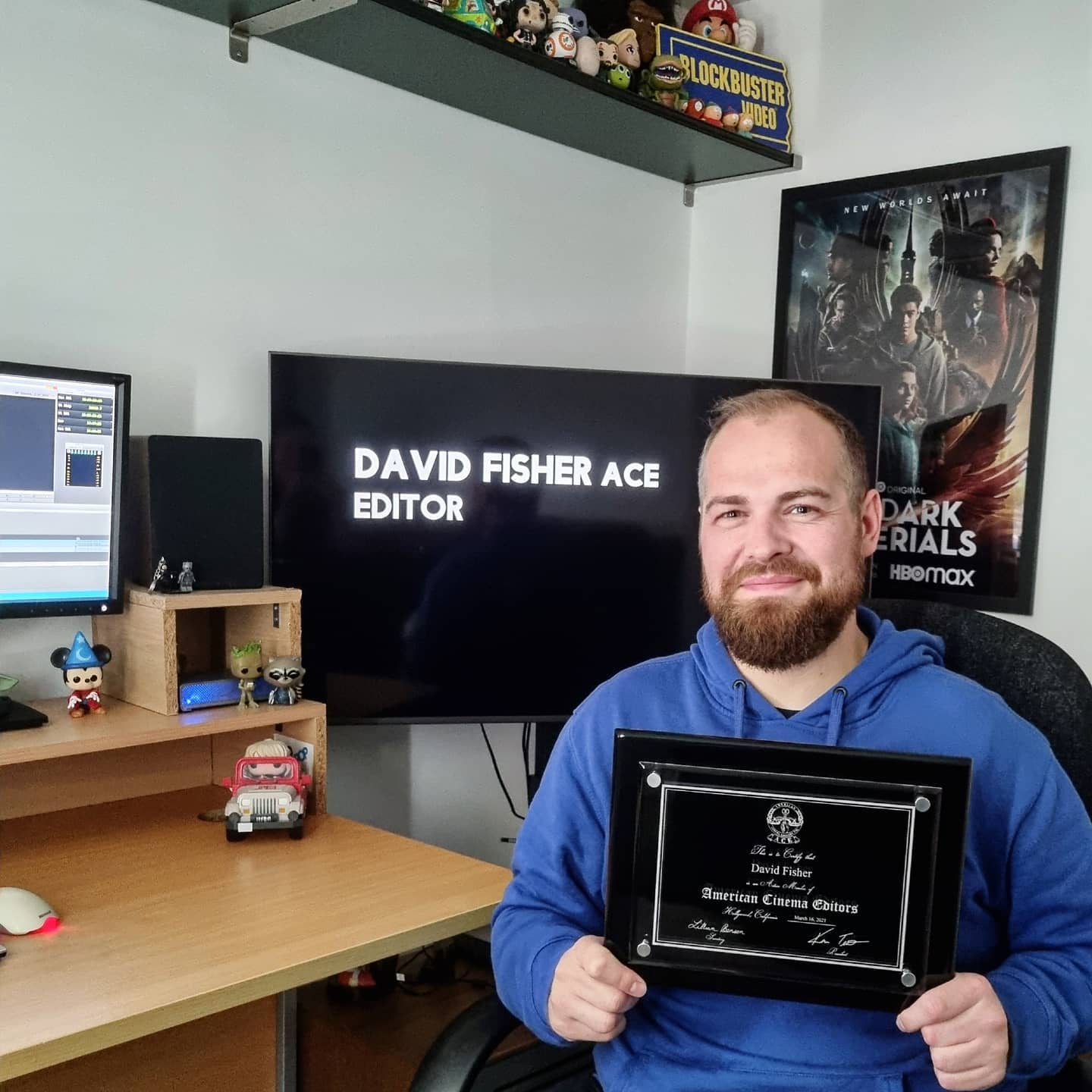
I know being an assistant requires a lot of organizational skills. Are you someone who can piece the puzzle together pretty quickly?
Sure, yeah. That kind of lends itself to editing because it’s just another puzzle. But I did learn very quickly as an assistant that organization is key and that you should take notes of what the editor wants you to do. I always walk around with a notepad, and I still do that now. When I’ve trained assistant editors, I’ve always encouraged them to write everything down because you’ll forget.
What was your first editing job?
It was called Mr. Selfridge, which was the story of Selfridges, starring Jeremy Piven. I started off as an assistant editor on the first series, but in the meantime I was editing a bunch of short films, recaps, trailers… really anything I could build into a show reel. So when I went back onto season two, I told them, ‘If there’s any chance of editing an episode, I’d love to step in.’
And I got that chance through Liana Del Giudice, an editor who I assisted a couple of times. She said, ‘You’ve been an assistant for so long, and I know how hard you work.’ In a meeting with the people who decide those things, she vouched for me, said I was hungry and that I’d make it work. They thought I didn’t shut up about editing an episode anyway, so they gave me a shot. After that, the director I worked with on Mr. Selfridge put in a word for me for another long-running drama in England, and I got on that. Then it just picked up momentum from there.
What is it like being in your head while you’re cutting a scene?
It’s kind of surgical. It might seem very basic to some people, but I’ll read the script page first, and then I’ll put the wide master of the scene, and I’ll watch that through to get a feel for how the characters are moving in the blocking and where they’re going. If someone turns their back to the camera in the wide, I know I’ll eventually cut back to see them again for dialogue (if it’s a dialogue scene).
I like to go through the timeline and make false edits of when people talk to get a sense of where I’m going to cut and how I’m going to get back around. Then I start making decisions: ‘I want to be close to that; I want to be on the mid-shot; I want to be on the wide…’ That’s how I build a scene.
And how do you think about an individual scene in the context of the larger narrative?
I’ll build a full timeline out of nothing, just title cards of scenes, and, if I’ve got time, I’ll put in scene descriptions too. If I’m in Avid, I’ll be like, ‘Alright, scene one is this and scene two is the thing I’ve just assembled,’ and I’ll see where scenes three and four are going, and then I start preparing for what’s to come: a big close-up of someone for a dramatic moment, or starting off a scene on a wide. I like being as visual as possible, even if I don’t have all the footage yet. Just because it sinks in a lot better, and I can picture how it’s going to go when I put it together.
Is there a specific scene you remember from anything that you’ve worked on that you really banged your head against the wall trying to figure it out?
There was a dialogue scene in Vera, the crime drama, where Vera, the main character, is sitting between two ladies who are possible suspects. And I remember putting the scene together and being like, ‘I don’t think I understand what this scene is. I don’t think I’ve got this right.’ I presented it to the director, and told him I needed some help.
He agreed it wasn’t right yet, and I think he was a bit like, ‘Just make it a bit more suspicious between the characters.’ In the end, it worked out. It was more about the looks and emphasizing what they were saying, knowing they meant something different. It was one of the toughest things to put together, just three people having a chat.
If you look at it now, do you think it works?
Yeah, I think I looked at it maybe two years ago and thought, ‘Why was I so stressed about it’?
Let’s talk about how the pandemic transformed the industry. When did you realize things were going to be different?
When I was an assistant, I did a lot of remote access to Avid in the cutting rooms, so I’ve always had that in my mind. But in terms of how we’re working now, it was when I was working on season two of His Dark Materials. We all had to get a hard drive and get out of there. And then it was a lot of FaceTime chats and note sessions over email. But we also needed to share screens in a more productive way, and we were still trying to figure that out.
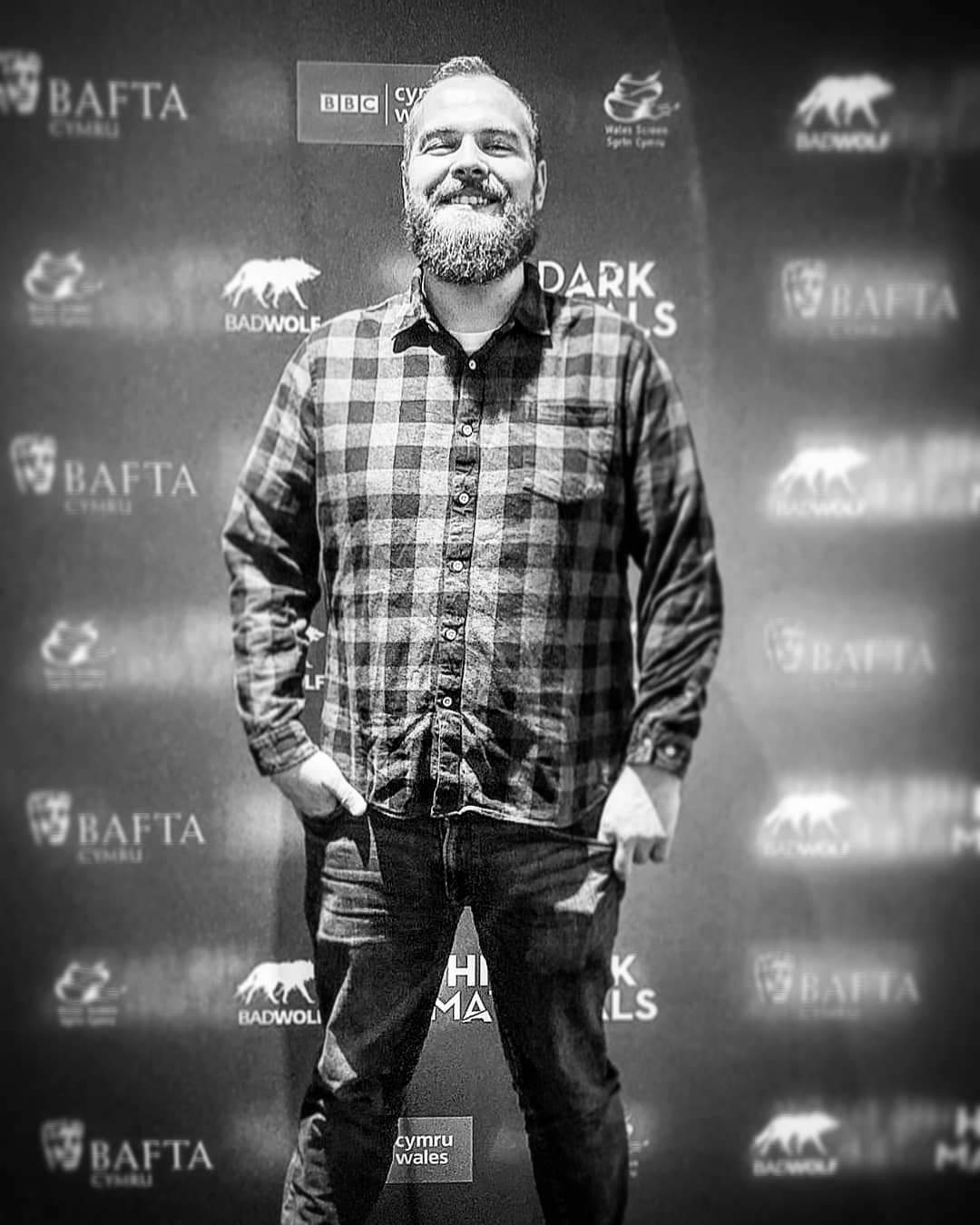
Is that how Evercast came into your radar?
Yeah. In January of last year, I did a Netflix show, and a friend at a company told me Evercast was brilliant–not a plug, it really is. He told me it was very robust, and I pushed for that on the production because I was cutting from home, in the northeast of England, and the production was in Bristol. Our restrictions of lockdowns kept getting pushed and going to Bristol wasn’t an option. So I asked if we could trial Evercast and then that was it.
We did another show via Evercast after that, and I’m currently doing a production via Evercast too. It’s really changed things, just to be able to smoothly share your timeline and also be in the room with people and get their feedback straight away.
Do you miss being in an office, or is that something that works well for the type of job that you have?
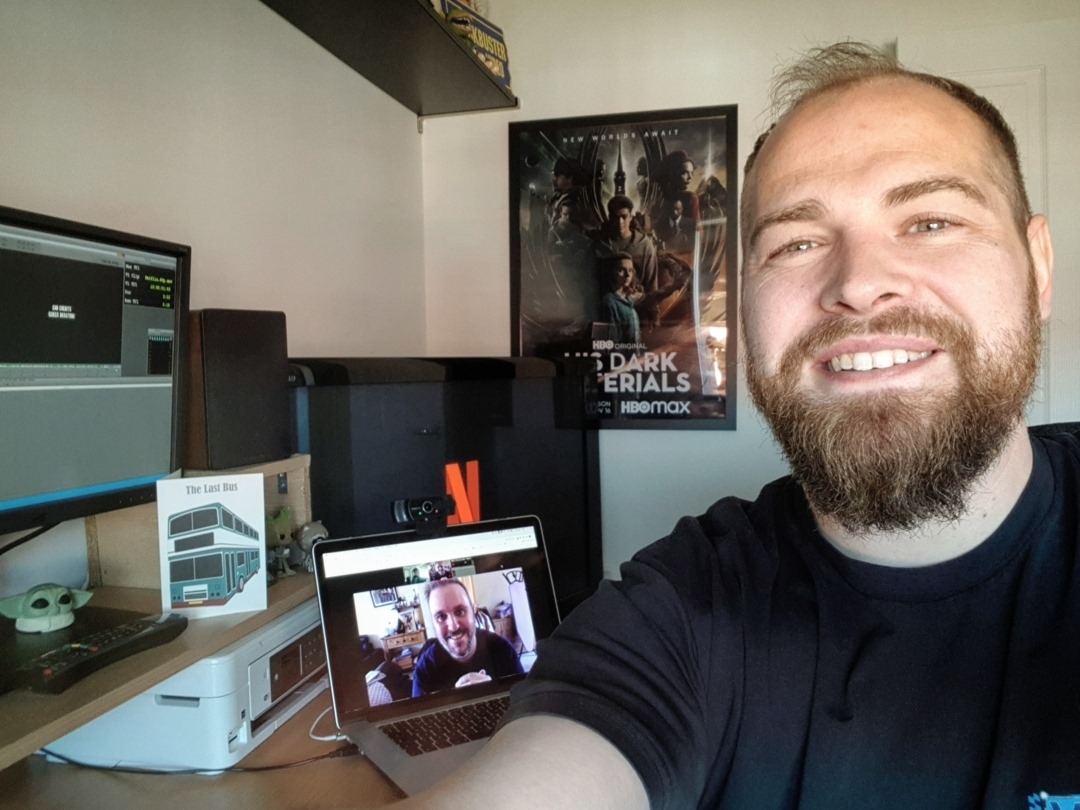
I do miss it, but over the years I’ve always done a home edit. I have a cutting room at home, which helps with not having to commute. That’s a blessing because you travel a lot in London just to get to work. I feel like a lot of people have seen the benefits of working remotely and working in a virtual room. I know one of the directors I’ve just worked with always works remotely because she’s based in the UK, but works in Canada and America, and she said that Evercast has been the most structurally sound way of working.
Do you see remote work becoming the norm, even in a post-pandemic world?
Possibly. Last year, when I was meeting for jobs, I kept getting told, ‘You will be working remotely because we can’t get a cutting room at the moment,’ which is also great news–the physical cutting rooms being in demand. So, there’s that. But I feel like it should be embraced, not just because it’s been the way I’ve worked for a year, but it’s really streamlined a lot of workflows, and it’s brought people together in a way. I do miss the real world, I guess, but I’m also quite a champion of working this way.
What do you see the future being like in terms of post-production?
I feel like we might open doors for people working in different countries. Our current showrunner has gone back to New York because the shoot is done. So obviously there’s a time difference, but I’m running an Evercast session, and we’re all in the room and we get notes.
You shift your schedule to work with that, but I feel like that’s quite amazing and that could be something to embrace. People will be working from different countries, not just different parts of the same country. I think that’s really exciting. There are thousands of people that don’t necessarily have to move to the most expensive cities in the world just to go after a job they want. I know that well.
What do you do to keep a healthy work-life balance?
I live near the countryside and we have a dog, so she gets walked a lot. And I do like to watch movies, which is just taking your work downstairs, you know? But I live in a nice part of the world, so it’s about getting out when you can and taking a break from the Avid.
Is there a piece of advice somebody once gave you that has stuck with you as a storyteller that you still hang onto?
I feel like a real benefit for me was assisting on those long-running TV shows because I met different editors and directors and I learned a lot from the way they carry themselves in the room. I can’t really think of an example right now, but there’s just little bits of advice that I picked up along the way, and it’s just about seeing what works for you.
So let me flip the question. Is there any piece of advice you would give to someone who wants to be in your shoes?
I would say if you’ve got the passion, then hopefully you will find a way through it. And if you want to be an editor, I would just get out there and write a script, and even if it isn’t great, at least you are filming and putting stuff together. I feel like if you want to become an editor, then you just have to get your hands on footage and just put yourself out there. If you’re an assistant on a TV drama, do recaps and teasers. I think that’s the only way you’re really going to learn, is to get hands-on experience.
I find it fascinating that a lot of younger people are editing almost every day because of TikTok and apps like that, which forces them to cut things together and think about perspective. Do you think that’s ever going to influence the way that we watch movies and TV?
It’s amazing, there are so many editors out there. You watch YouTube videos, and they’re so well put together, and it blows my mind. I’m like ‘Oh, I need to up my skills, you know?’ So with that, it is pretty worrying. [Chuckles.] There’s so many people creating content, aren’t there? And what’s great is it’s all accessible, and if you want to watch that, you’ll watch it, and if you don’t, you won’t. So it’s good that there’s just so much out there for everybody, really.
Do you think we’re getting increasingly niche in terms of our viewing habits? Or do you think we still can make ‘water cooler’ shows?
I don’t know, it’s weird. I find myself re-watching a lot of old things that I’ve seen before.
Like what?
My girlfriend and I are watching Lost, and I’ve seen it once before from start to finish, but it was over ten years ago now. It’s amazing watching it. The characters are all incredible, you really care for them; I’m just glued. I’m not picking my phone up, even though I’ve seen it before.
And then there’s movies. We haven’t done it for a while, but we were making a point of picking out a DVD or a Blu-Ray to watch every night. Over the years, I’ve built a massive collection, I’ve got like a Blockbuster video. Not literally but shelves of so many DVDs. And I just love picking them up and looking at them, because we don’t have rental stores anymore.
It’s interesting because you’re not the first person who has told me that they’ve been rewatching Lost recently.
Oh, really?
Yeah, but not only Lost–also a lot of other older shows. A lot of them with 23 episodes per season, which to me is insane. I don’t know how they did it.
I know. The first season [of Lost], which we’ve just finished, was so good.
Do you think we’ll ever go back to having 23-episode seasons?
That’s more of an American thing. I think the most I’ve worked on is ten episodes. Pennyworth is ten, and Selfridge was ten as well. Dr. Who is maybe ten or thirteen–I can’t remember, but they’re probably the biggest ones, and then after you’ve got serial dramas, like Holby City, which are constantly running all year around. But I don’t know. I remember, actually, getting on the set of Selfridge in 2010 and being like, ‘Well this is like an American show, it’s got ten episodes, as our long running shows usually had 6 episodes per series.'
Do you think there’s anything behind that cultural difference?
I don’t know; I just find it massively impressive that they can make that many episodes in a season.
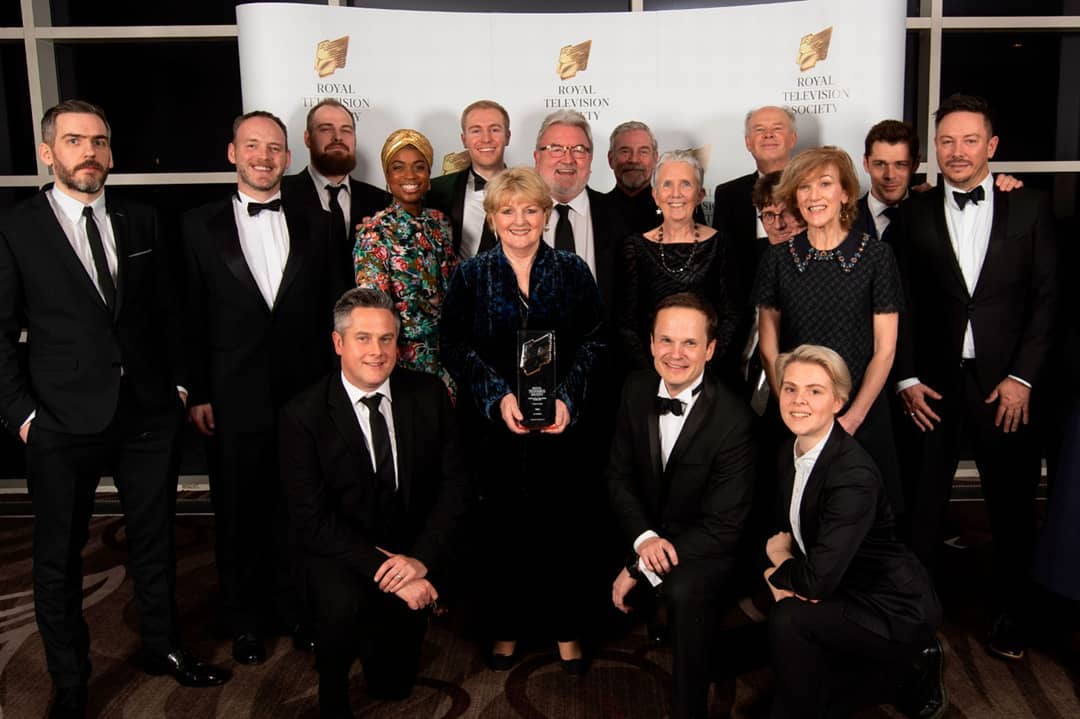
Were you a Dr. Who fan before you worked on the show?
Yeah, I was. I was quite geeky in the interview and then went and got the Dalek out and put it in the room while I was working there. Yeah, quite embarrassing. I’m the same on Pennyworth. I had my interview and I’ve got like this Batman cushion that is on my sofa and it’s been on my sofa for years, and the guy is like ‘Okay…’
It worked!
Yeah, the cushion got me the job.
What is it like editing something that is heavy on special effects?
There’s been a few shows now, like Dr. Who, His Dark Materials, Pennyworth–they’re all quite heavy on the effects. I guess Dr. Who and His Dark Materials, you had to get your mind in the right mindset of how it’s going to turn out, because His Dark Materials has a lot of Daemons, so on set you’d have puppets and then after that they’d do a clean plate. Then you’re in the cutting room and you’re just kind of going, ‘I’m sure that’s the timing of it.’ So it might have been daunting when I first did it, but I’m so far gone into the world of not having something to look at and knowing it’s going to be fine when it’s finished that it’s easy.
Final question. What five films or TV shows would you take with you to a desert island?
I’d take Aliens. Point Break. Fight Club. Probably The Princess Bride. What’s the fifth movie? I’m going to say The Lost Boys.
What if there’s an accident and you can only save one?
Point Break.
What do you like about Point Break?
It’s one of the first films I made my girlfriend watch when we got together. I don’t know. It’s the world, the music, Patrick Swayze, Keanu Reeves, surfing, the score is amazing. It’s quite euphoric–action. It’s got Anthony Kiedes from the [Red Hot] Chili Peppers in it. I don’t know, it’s got so much going on. What’s not to like?
Create together remotely, in real time


.avif)






.avif)


.avif)
