


Big laughs, big pressure, and even bigger expectations. For Hellmann’s latest Super Bowl spot, a silly spin on “Sweet Caroline” turns deli culture into an anthem designed to stick with viewers long after kickoff. Behind the scenes, the teams at MakeMake and VML brought together meticulous planning, on-set spontaneity, and post-production collaboration to land every beat. We caught up with MakeMake partner and editor Adam Pertofsky on hilarious BTS moments, navigating the demands of Super Bowl storytelling, and how Evercast kept collaboration fast and flexible—no matter where the team was working from.
This interview has been edited for length and clarity.
Tell me about MakeMake—and also the affiliation with Rock Paper Scissors, because you're a partner there, correct?
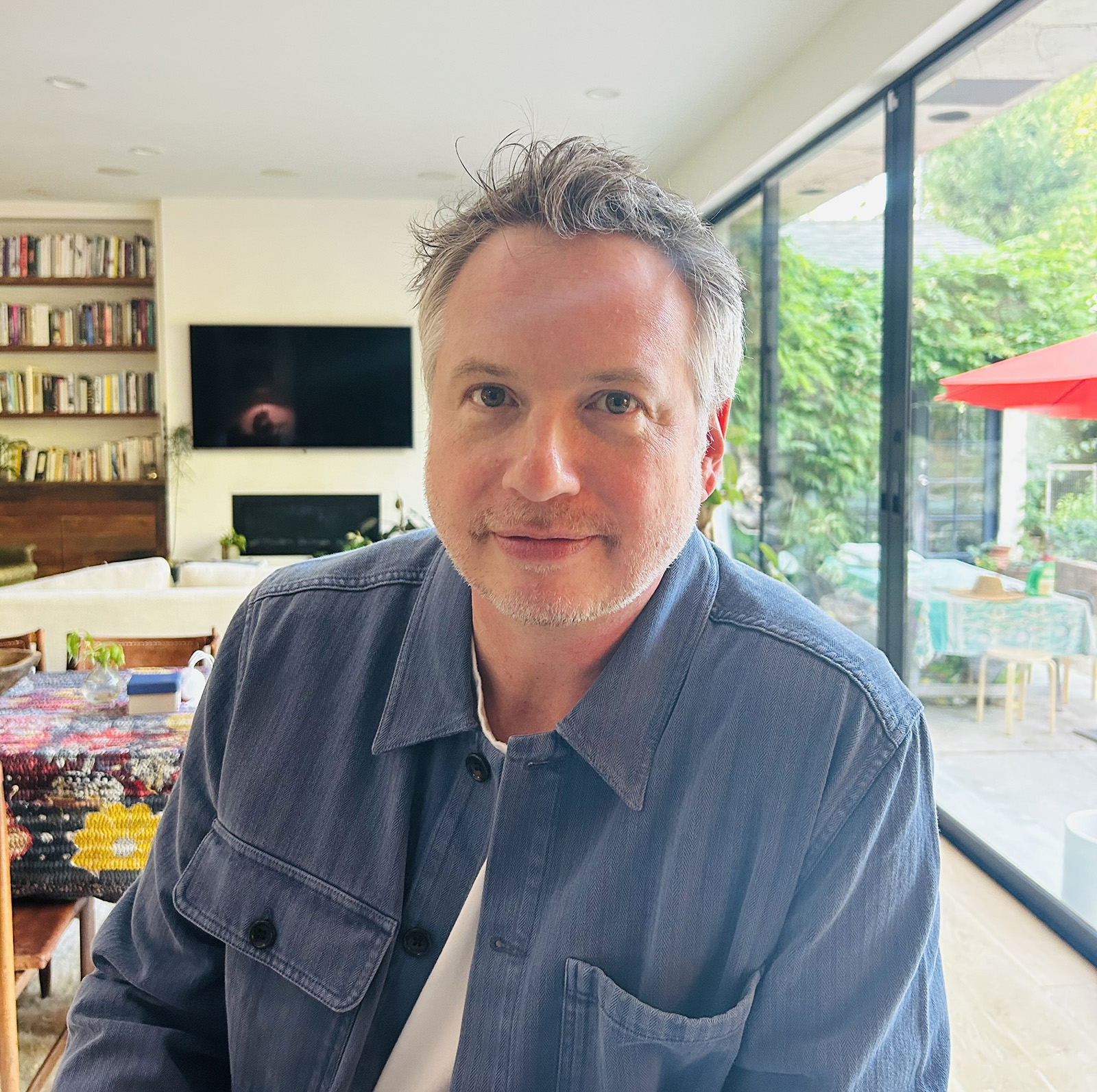
Adam Pertofsky: Yeah, I’m a partner at MakeMake. Over the last 30 plus years, we've created five different companies, but we're now folding all five into one studio with different departments. So what was Rock Paper Scissors is now just part of MakeMake. Everything will be MakeMake.
Got it. And tell me a bit about your role there.
Adam: I've been a partner at the company for 30 years. The company's been around for 33 or 34 years, so I came in pretty early. It was about eight of us at the time that I started, in one small office in West Hollywood. Now there are 220 of us in three offices. Originally we just did offline, then we started finishing, and little by little, it grew organically to offer more. I’ve directed, I've creative directed, I've done a bunch of stuff besides editing. Editing is my bread and butter, and I still love it, but it's really about what I can offer per the job as a creative.
This past year, I've creative directed on a couple jobs; I've also developed a couple things to direct. I'm currently trying to raise money for a documentary. But at MakeMake, I'm a partner, I'm on the management team, and I'm an editor—basically a creative, a filmmaker, who will do whatever the job requires.
[MakeMake founder Angus Wall] and I have always talked about not wanting to wear one hat, but rather be open to what’s out there and evolve. Anytime I've directed something, it's made my editing better. Like anything else, the more you expand, the more you get to look back at what you've done in a different light. And it can only make you better.
Yeah, in any role! So, how often are you doing remote work with clients, as opposed to in-person?
Adam: I would say there’s a remote element to every job. It’s rare to do a job these days without it. I did a Starbucks job right before this, and every day there’d be someone working remotely that you’d turn on Evercast for. Sometimes the CCO of Anomaly wanted to talk to me, and we just jumped on Evercast, in case he wanted to see anything as I was talking to him. It's much easier to just be there and do it.
I was just on Evercast before this interview, showing a cut to a director for a job I'm doing now. I’m constantly using it. It's just part of my offering at all times. It needs to be, because it feels like people are really only in the office three days a week, and if they don't need to be there, they prefer not to. So it's a great way to continue working and collaborating without having to be in person. It's the next best thing because you're communicating and looking at the same thing at the same time.
There were so many years before the pandemic that I’d talk to the director online, they’d download what they wanted and what they were thinking, and that was it: you'd send them cuts and get notes. Now for a director's cut, you can just jump on [Evercast] and get to it really quick. It's a way easier way to work because they're usually in production on another job—or they’re living on the other side of town or in a different city. This way, it's really easy to knock out the cut or whatever they want to show to the agency.
So, tell me a bit about this Hellmann's spot that you're working on for the Super Bowl and how you got involved.
Adam: Well, I worked on the Hellmann's spot last year for the Super Bowl, which was the When Harry Met Sally one with Meg Ryan and Billy Crystal. So, it's the same creative team. This year was really interesting though, because they got the rights to the song “Sweet Caroline,” rewrote it as “Sweet Sandwich time,” and actually produced it in the studio.
They created this character “Meal Diamond,” who was born in a deli, has never left the deli, has never been outside—and that's the whole story. So “Meal Diamond” goes around showing how he communicates at sandwich time with people through Hellmann's mayonnaise. It's very funny. I've been working on it for over a month, and I still enjoy it. I'm still laughing and singing along to the song; it never leaves my head. And that’s not a bad thing! I've been enjoying it every second of the way.
Love it. Having worked on other major campaigns, what do you think makes a Super Bowl spot a different experience? Are there different kinds of pressure or expectations?
Adam: Yeah, there are different expectations. I mean, you're going to have at least a billion eyes on it. The Hellmann's spot we did last year—the long form that we put online—got 30 billion views. There are, what, eight billion people in the world? So, the pressure is that you need to make an impact, knowing that people are going to watch it over and over again—not just once or twice, but like, 10 times—and share it with friends. So, you need to have some edge.
There's going to be a lot of noise and a lot of people trying to grab attention during the Super Bowl, so you have to figure out how you don't get lost in the shuffle. I think that's really the agency coming up with interesting concepts. To me, for the Super Bowl, the ones that are funny resonate the most. I think people are looking for a laugh.
And what about the brand? Are you working directly with the brand, or are you working with an agency in between?
Adam: I work with an agency. I don't usually deal with the brand. The agency will hire me, as well as the director; I'll work with the director and the agency, and then they present it to the client. This one also had multiple voices in it because, you know, you want to make sure [the artists and songwriters] are happy with it, as well as the director and the agency. And then the client has to approve it, of course. So there are a lot of cooks in the kitchen. But it seems like everyone's very happy in the end, which is really nice. You want something to go out and for everyone to be excited about it.
“Sweet Caroline” must really be raking in the royalties! I hear it all the time in commercials, movies, everything.
Adam: Oh, it's everywhere! While we were working on this, I was watching Landman, and I was like, “Oh my God!” They played it in one of the episodes. I think the Boston Red Sox play it every game, too. But it's one of those songs you never get tired of, and every time you hear it, you kind of tap along to it. I remember showing a rough cut to my dad, just to show him what I was up to, and immediately I saw his foot start bouncing along to the song. It's very cute.
It’s an anthem for sure! Tell me more about your editorial process. Was there anything unique from a creative or technical standpoint?
Adam: This one was fun because it was so thought-out beforehand. I basically cut the storyboards together and then started replacing the storyboards in my edit. So then you're just playing with timing. It was a nice way to cut this time. Before this, I came off a Starbucks ad, and I think it was 14 hours of footage to make a 60-second edit, and there were no storyboards. The director really knew what she wanted, so it was great to work with her and figure it out, but it was molding clay, you know? Just a very different creative process.
But I wouldn't want to do the same thing every time—each one would get boring or exhausting. It’s nice to go from a crazy one with so much footage to one that’s like color-by-number. And this one is very much like a music video because it's cut to a song. So, there's only so much I can play with. Someone will be like, “Well, if you take a little bit off that shot, can we add it to this shot?” but you can’t, because then it's out of rhythm. You get these blocks where things have to stay, and you have to work around them.
Makes sense. And tell me about your collaborators on the project.
Adam: VML is the agency, and there I work mostly with Susan Golkin, [Duc Nguyen], and [Nicolás Romanó]. They're all big time creative execs, in the room every day. And then we had Tom Murphy and Rob Riley coming in and out. Rob is the Global CCO of WPP, so he’s a big deal. I've known him for many years, so it's always nice to see him. It's great to work on a commercial with that high level of creatives, because it's just them and the client, which makes things a lot easier.
We had enough opinions as it was—a lot of people to make happy! But this way, you can communicate directly with everyone instead of going through a game of telephone, where things change moving from one person to another. And I flew into New York to be with them in the room, so when someone has a problem, we just figure out the solution and do it. Then we can go right to the client and see what they have to say about it.
Was everyone in New York then?
Adam: Well, the agency is all New York-based, which is why I flew out there. But I also worked on set in LA. I was cutting on set as they were shooting. I honestly prefer that—I think it's really helpful for production, especially on a multi-day shoot. This was a two-day shoot. I was in the kitchen of Canter’s [Deli], which, you know, wasn't the most pleasant situation! But it was cool because at one point, I remember showing the director, Tom Kuntz, what I was up to, and he came up with this shot on the spot.
He goes, “It could be really funny if [Meal Diamond] throws the guitar at this moment,” and he went and shot it. It's in the spot, you'll see him throw the guitar—it's hilarious. Tom also came up with putting in this cat screech sound when the guitar gets thrown. It's pretty funny. I love that kind of stuff.
You know, they did all the homework, they storyboarded it, it was pretty thought-out before they got to shooting because they had the song as a guide. They knew what shot fit for every part of the song, so all the setups were locked in. But once I started putting stuff together, then Tom started seeing little moments to join scenes together that made it move a little smoother. It was cool to watch.
[Then after production] I ended up working on Evercast with some of the team in Los Angeles. Tom, the director, is in Silver Lake [Los Angeles]. He often prefers to text and talk on the phone, though. And the producer, [Julie Collins], sometimes had to work at home, so I’d put her on Evercast so she could hear everything that's going on in the room, see what we're working on, and keep moving things forward.
Even if we're in the same city, we often need a remote option. Sometimes people just want to work from home, and especially right now—there’s some kind of polar vortex going on in New York, so I don't think anyone is moving!
What about the timeline? I know these things tend to be pretty compressed for commercial work.
Adam: I feel like all jobs these days are on compressed timelines—until they're not. I've seen it over and over. I've done three jobs this year where we have two weeks and that's it. Then all of a sudden it's two months later, and we're still working on it. So, I don't get stressed out by timelines anymore. I used to, but they feel very movable these days. If the client’s not happy, the client will change it.
Most of the time the agencies can't change timelines, and definitely production can’t. But if the client wants to keep working, we keep working. This one was a little different because it’s the Super Bowl, so you do have a date that it has to hit, and they're spending so much money to run it. I think a 30-second ad is like 5 million bucks or something. Really the Super Bowl is the only time where the schedule is locked in.
And how were you set up to use Evercast? What hardware and software were you using?
Adam: I work in Mac Studio Pro. I have two monitors, and I work in Adobe Premiere. I use a screen and a half just for Premiere, and then I have a separate half-screen. My left screen is for Evercast. I have a setting called “In-office EC” that I just click on, and it sets it all up for me. So I can always see people as I'm working. I have a TV, where I watch it back, and also can watch what they're watching, to see what they're reacting to.
Or I can watch their faces as they're watching it. That's the nice thing about it. Traditionally, as an editor, everyone's behind you, so you’re never seeing people’s reactions. When we moved to our new offices, I actually set up my room so the clients are next to me, and I can look it over as they're watching something. We're both looking at the same point, and I can watch them react and catch, “Oh, that they're not happy about that,” or, “Yes, they're very happy about that!”
Their initial reaction when you show them something is really important. It's funny, when I’m editing by myself, sometimes I'll pull someone in to watch—usually my producer or assistant—because when someone else is watching, you look at it differently. The first time I show something to someone, I see things that I didn't see by myself, even if I just looked at it 100 times by myself. Just the presence of another person makes you see it through a different lens, all of a sudden.
Yeah, a lot of editors talk about that unexpected benefit of seeing reactions on Evercast. So, you were using Evercast primarily for editorial reviews?
Adam: Well, to actually work. I'd show something, and someone would say, “Oh that sync that looks a little off. Tighten that sync,” or “I want to make this area more chaotic,” and we'd try different things. I'll work for a few minutes, then show something, and get a reaction. People are busy. Sometimes I get an hour, maybe two hours, to show different edits. But that’s what’s cool about having Evercast. Like, last week we had to work on a Sunday—everyone was home and we only had an hour—but we needed to keep going because of the timeline.
Right. At least they started early enough to be able to have wiggle room, not a crazy race.
Adam: Yeah, I basically edited everything, and then we had Christmas through New Year's off, which was nice, and then came back to it. That’s also nice because you have fresh eyes. You haven't seen it for a couple weeks, and then you go in and look at it very differently from when you're in the heat of the moment. Last year though, I think we finished the spot before the break, and then didn't come back to it—it just went to air a month later.
Wow. So, where do you think Evercast brought the most value to this project?
Adam: Connection and collaboration. Texting is great because you can get quick answers, but a lot gets lost in translation. Maybe I'm old school, but I’d rather talk to someone on the phone and hear their tone. You can tell when someone doesn't like something.
Well, Evercast is even better because now I'm seeing your face as well as hearing your voice. I can watch you react to things. It's also a time saver because you get right to the point much quicker than going back and forth, sending links of cuts and getting notes, like “Try this at four seconds, try that at eight seconds.” I’d rather just knock it out together. We get through it much faster.
Editing can be an invisible art. What do you think audiences underestimate or overlook about what great editing brings to a campaign?
Adam: That's a tough one. I think at every step of a production, someone brings their personality to it. I got into editing because I was working in production and I hated not seeing what I was working on. l always saw editing as the period at the end of the sentence. And that was the thing that I really enjoyed—I'm the last person who touches it.
After me, yes, it changes color, it changes sound and stuff, but that’s just enhancing what I already did. The beauty of editing is I can put a language to something—through the pace, or even how I don't cut something, maybe leaving a moment longer. I think that's where I put my spin on it. Who l am as a person comes across in the edit through what I do creatively.
Create together remotely, in real time


.avif)





.avif)


.avif)
