


Anthony Blue Jr. is no stranger to excelling in multiple flourishing careers. While the Covid-19 pandemic forced most of us to pivot personally and professionally, it opened up opportunities for creators like Blue to hone and perfect his skills as an animator.
As a multi-hyphenate professional born into a family of artists, Anthony Blue Jr. is a force of his own and one of the more recognizable names on the New York City art scene.
We sat down on a brisk fall afternoon–the day after his adidas MakerLab collaboration closed in Times Square–and discussed his creative origins, what is on the horizon for Antnamation, and how he makes time for it all.
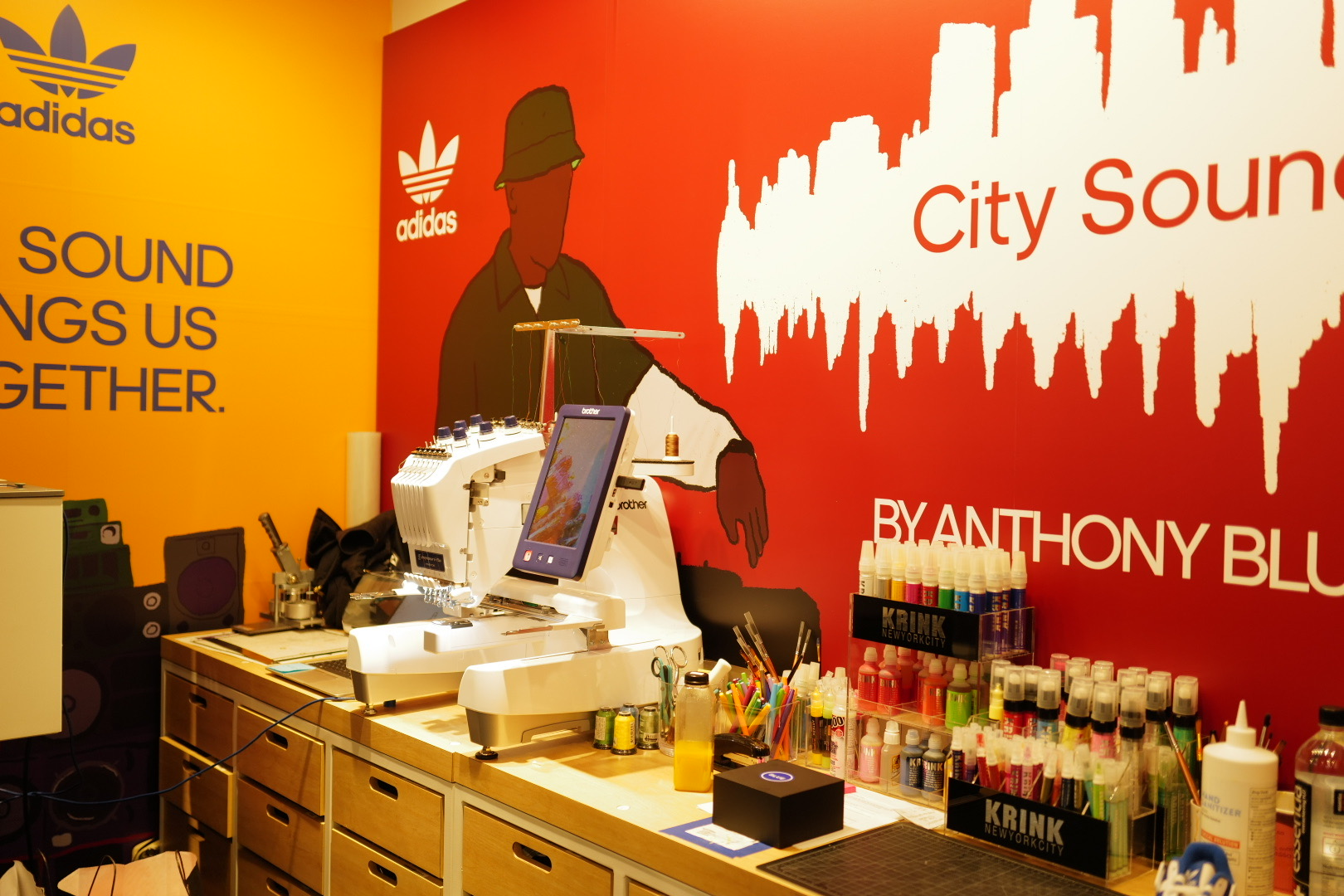
Let’s start with your background. You come from a family of creatives–what was that like growing up? Was there always a surge of artistic energy?
I think just being around my brothers, we were kind of just forced to participate with each other...whatever they were interested in, I kind of just gravitated to it by default because they were my older brothers, and I just followed their lead.
When did you sit down and start drawing, writing, and painting? When did you know you were an artist?
[My brother] Brian was always drawing, illustrating, designing Air Force Ones, drawing on people’s Air Force Ones. So I would just kind of observe that. I don’t know if I was doing anything yet, I would just see them making stuff. And at one point in high school, my granny gave me cameras [saying], “Oh, these are old cameras I thrifted.” I would always be filming – filming in the hallways at school.
It’s hard to pinpoint when [I started drawing] because, with the computer, we had Paint and then Paint turned into Photoshop, so these tools [were] kind of just planted in our life without the awareness of I’m going to learn it. It was just something you could use and play with. And so, through the trajectory of high school, MySpace came out, and I knew Photoshop, so I started to make crazy profile pictures, learning coding from MySpace to do other people’s pages.
I know one of your biggest mottos is “Believe in Yourself, Do It Yourself,” so I’m very curious about what that represents for you? Where did that motto come from?
“Believe in Yourself, Do It Yourself,” was the shift for everything in my life. But that originally came from my partner American Matthew–we went on a DJ tour in 2015. He used to live in New York and he was DJing at a bar called the Brass Bottle...our friend owned the spot, Matt DJed, I would do photo shows there.
When Matt DJed, I would do video productions. And so there comes a moment where Matt says, “I’m done with New York, I’m moving to Puerto Rico.” In that moment, my go-to favorite DJ at the time leaves that void of oh, he’s not here, I should start DJing.
That’s why you got into DJing?
Yep, because I wasn’t hearing the music I wanted to hear from the DJs that had existed at that time. And just knowing that he was the person pressing play on the songs, I said, “Okay, with him gone, I have to step up and do this.” So I started DJing in 2014, and in January 2015, and he called me saying we should just go on tour. He said, “You’re a great DJ. I’m a great DJ. We should just go on tour and push it as far as we can and call it the ‘Believe in Yourself, Do It Yourself tour,’” and I’m sitting there like, “That’s a great idea.” We had nothing to lose.
So we did a ten-city tour across America. The reception of it went really well and it just kind of opened our eyes–we didn’t need permission to do this grand thing and turned it into the label that it is today: Believe in Yourself, Do It Yourself records.
How do you find time to make space for all of the interests that you have: photography, music, animation?
I always thought of it as the people who want to get straight A’s in school take the time to do well on all of the subjects. So for me, the things that I’m interested in, I make time for them, knowing that it feels right in my school, and I can’t be doing it wrong. When it came to photography, I moved to New York specifically to do photo video, and even [when] looking for jobs, I [knew I] wasn’t going to get a job at a restaurant or for this or that–it’d have to be in the photo space so I could build on [the future]. I think just committing to the interests and what I feel in my heart kind of forces me to stay aligned with all of that stuff.
When I went on a tour to do photography for artists, it would be a 30-city tour, and on the last two shows, they’d let me DJ because I’d be in the van playing the songs and they would be like, “Just let Blue close out the night,” which turned into my DJing. And so for that love of music, spending time on it, learning, and learning what buttons do what, just taking the time, it’s commitment, really. Commitment to your interests.
When did animation even come into the picture?
I started animating in 2017. I wanted to push myself–the music was going well, [but] photography started to kind of get boring for me. Just because of the process: you do the process, you shoot the picture, you put it on Instagram, and then repeat. I want to do more than just take a picture. I was shooting GIF photos, and I was trying to push my photography.
Once I learned to make GIFs, it opened my mind. Each frame of the photo changes if you just do something else or if you move like this, [and it] led me into animation.
The ambition of it had me more curious, and I was just doing it out of fun just because I needed another outlet. Photography was a career where it was client work, and it kind of drains you. Music was another outlet that was fun, but that was business too because I was gaining popularity in the circuit of the scene.
So animation was something I could just do, sit down, and make and not be attached to money. And that’s kind of how I got into it because it was ambitious, and I didn’t see Black people doing it; I didn’t see friends doing it, so I just sort of stuck with it.
That actually brings me to a question I literally have written here. According to Zippa, 3.4% of animators in the U.S. are Black. Is that a number you knew before I said it?
No, but it feels like it.
What does it feel like to be working in a field at a high level, with MTV, and Adidas, and you won a Clio Award for your animation with the Biggie song, in a field that’s dominated by white men?
It feels like a blessing on one hand and it feels like a headache on the other.
Do you feel the weight of responsibility?
No, I don’t feel any weight in a bad way because I stumbled upon it by accident, and then the pandemic hit and I said, “Okay, you’re in this industry and are just thrown into it.” The scary part now is the work comes in. I don’t have the bandwidth to take on everything, which is disappointing, and I feel like I do miss out on opportunities because I haven’t done the work to bring in or connect with other animators.
What’s been one of your favorite projects to work on? Antnamation-related because I know it’s hard to narrow down.
It was more stop-motion animation, but I did a project with Calvin Klein. They reached out to me to do this influencer thing, like “Oh, we’re going to send you some clothes and we want you to put them on Instagram,” and when that came into the inbox, I was like, time out. [Laughs.] We pitched a project to them, and they gave the green light.
I got to hire the models and bring in a team, [doing] all the work without them even changing anything, so they thumbs-upped the whole thing.
It was just this whole process of a brand reaching out, giving 100% trust, funding [me] well ,and just executing, [as opposed to] what they were expecting when they first hit me up to just take a picture in some underwear. What is that going to do for me? That was my favorite thing, too, and now people reach out to me specifically for that and I’m just like, I have to hold onto that.
Do you think you shifted more towards animation during the pandemic because it was easier to do remotely? Or do you think your interest in it grew?
I think that–I hate to get spiritual. I don’t hate to get spiritual, but I think it’s very divine how something told me to learn animation for when this time–for when COVID lands. I’m already in the position of oh, here’s this surge of things, and we know you know how to do it, here are all the opportunities.
So it was just a survival instinct of I can’t go DJ, photography and sets are kind of shut down–you can just sit in your house and deliver this work people are asking for. So I think it was pretty divine. Again, trusting your instincts. I wanted to do this not for [the] money, and then it turned into a whole other career.
And so how has your creative process shifted during COVID?
People’s expectations in animation are–what I’ve learned is a lot of people don’t know how that industry works or how the work is created, so they come to you with ideas that are…They think you’re Pixar. And there [have] been times where people have sent me–you know that movie, Into the Spider-Verse? People have sent me references like, “We want something like this,” and I’m like, “There are 60 animators on this thing. I’m one person; we have to scale back and figure out how we can do this.”
I feel like [my process] has shifted as far as I have to communicate way more now. I have to paint the picture when clients reach out. With animation, you have to explain: “The first ten seconds looks like this, the middle looks like this, [and] it’s going to end like this. Visually, we’re going to use these colors.”
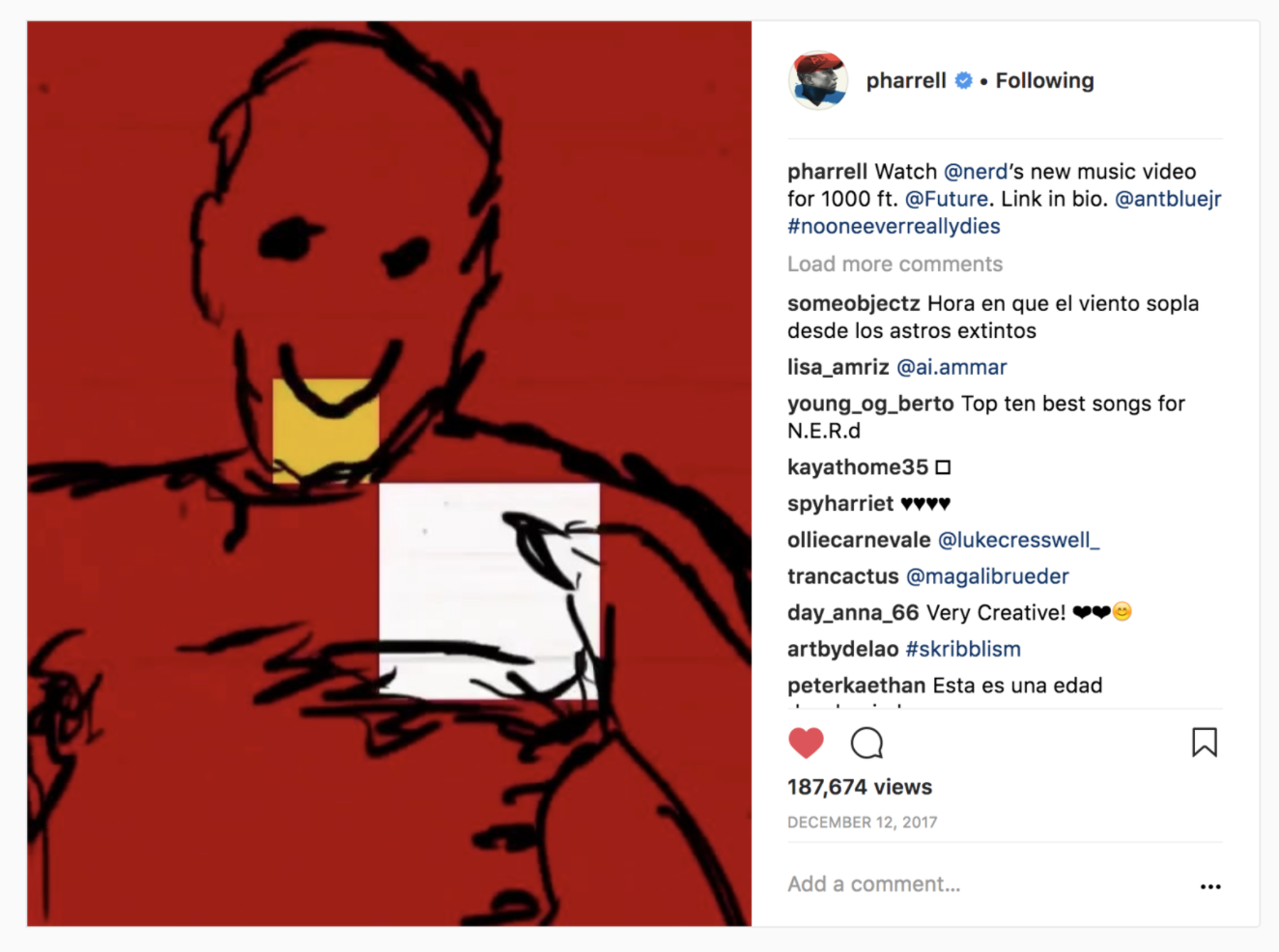
I saw that Pharell posted one of your animations [a while back]. What was that like?
Pharell was one of my role models–still is. Just that moment, I was on my way to Kinfolk and I got off the train and my Instagram [was] going crazy. That was still one of those moments of this stuff is so powerful; it’s something I just do for fun, [but] it can pierce through and connect. It’s like, “Oh, I’ve got to make one for Beyonce!” If this stuff is that strong, it’s just taking that hint.
If Pharell posted it, there’s something here. Making the Donald Glover one or the Childish Gambino one, with his label hitting me up trying to do something, it’s like, wow, this stuff is actually powerful, and it’s cutting through to get into contact with these people. So that was kind of my “I have to keep doing this.” But yeah, I wish I could have spoken to [Pharell], but I’ll take the posts.
What advice would you have for somebody who is looking to get into animation?
I would say don’t do it because if they don’t listen to me, then they’re meant to do it...But definitely the sooner the better. When you start learning different programs and you’re like, “Why didn’t I learn this two years ago?” There are certain programs on the market where I’ve had the thought to work in them, but I always put it off, then later realized I needed to. So I think if they want to do it, they should just start immediately.
So what can we expect from Anthony Blue Jr. in 2022? What do you have in the works that you can share? What are you excited about?
I feel like I need to refresh, to be honest. I feel like everything I came to do in New York, I’ve been blessed to see it through, and I never thought about what to do after that. So that’s where I am today: what do I do next? I hope to continue to travel and DJ. Artistic-wise, I’m kind of searching for a message because I think Instagram is kind of–to me, it’s not fun anymore, especially just seeing how many artists there are today, you’re just seeing a bunch of businesses.
I feel like I haven’t experienced an art project on Instagram that was like, “Wow. You know when Beyoncé drops, it’s going to be phenomenal.” I’m trying to be excited about art again for me personally, [and] trying to figure out what the message is that I want to share versus just posting on the ‘Gram.
[Cover photo by Cortnie Vee.]
Create together remotely, in real time


.avif)





.avif)


.avif)
